
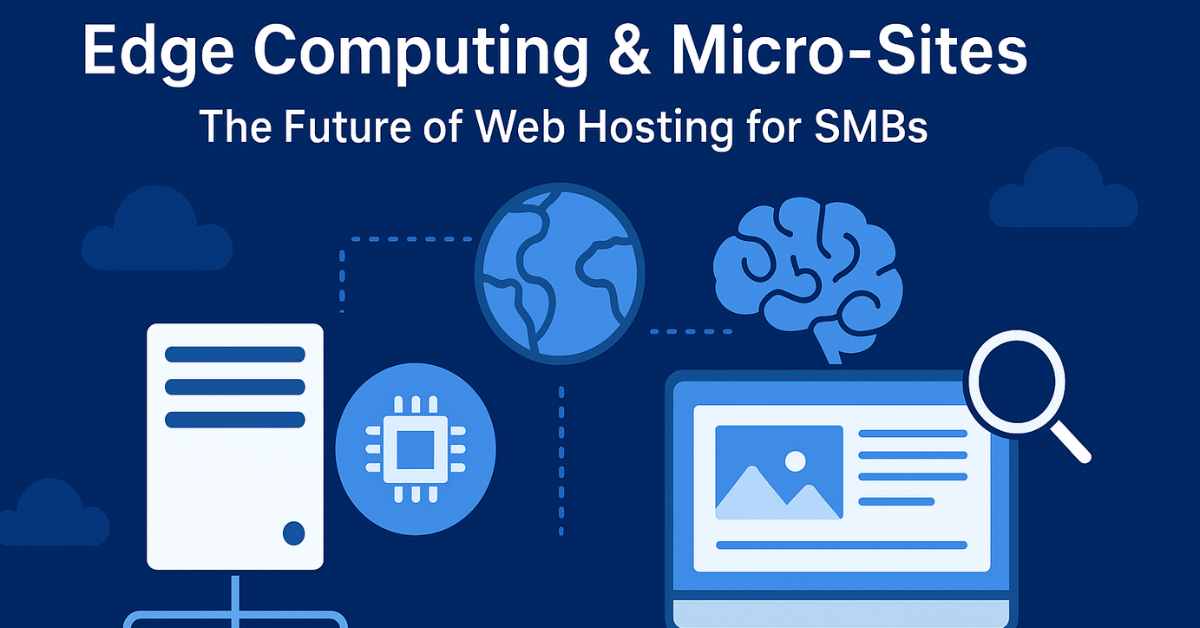
Explore how edge computing and micro-sites are transforming web hosting for small-and-medium businesses in 2025—faster loads, global reach, cost-efficient infrastructure.
For small and medium-sized businesses (SMBs), web hosting has long been a trade-off between cost, performance and reach. In 2025, however, a new model is emerging: the combination of edge computing and micro-sites is redefining what hosting can be. By distributing site infrastructure closer to users and deploying lean, purpose-built micro-sites, SMBs can achieve enterprise-level performance—without enterprise-level cost or complexity. This article explains why this shift matters, how it works in practice, and how agencies like Epixs can help clients adopt it effectively.
Quick Facts
-
Edge data centres and edge-hosting nodes are rapidly growing in importance: Edge centres are being deployed closer to users to reduce latenc
-
Hosting trends for 2025 show “edge computing and CDNs” as a key driver for web-hosting evolution. For SMBs, the shift toward serverless and edge architectures means lower upfront cost, better performance, and easier scalability.
What Are Edge Computing & Micro-Sites?
Edge Computing in Hosting
Edge computing refers to the practice of deploying computing resources (servers, caching, processing) closer to the end-user rather than centrally in a distant data-centre. This proximity reduces latency, improves load times, and enhances user experience.
In web-hosting terms, edge hosting means your site or parts of it (static assets, content, even serverless functions) are served from nodes geographically closer to your visitors, often via global CDNs or edge‐function platforms.
Micro-Sites Explained
A micro-site is a small, specialised website (or subset of a site) focused on a specific campaign, geography, product line or audience segment. Rather than a large monolithic website everything in one place, micro-sites enable targeted messaging and rapid deployment.
When combined with edge architecture, micro-sites can be deployed quickly, optimized for performance and scalable globally without needing a heavy backend infrastructure.
Why This Hosting Model Is Important for SMBs
Performance & User Experience
Performance is a major ranking and conversion factor today. Hosting via edge nodes enables faster page loads, better responsiveness and improved user experience—especially for users in diverse geographies.
For SMBs competing locally or internationally, this means they can level the playing field with larger companies.
Cost-Efficiency & Scalability
Edge & micro-site models often allow usage-based or region-based deployment rather than large upfront investment. For example, rather than maintaining a big server cluster, you deploy micro-sites via edge functions on demand. SMBs benefit from pay-as-you-go and low-maintenance setups.
Geographic Reach & Flexibility
If your business serves multiple regions (within India or globally), deploying micro-sites via edge nodes means you can localise content, improve latency, and offer regional variants without spinning up full infrastructure for each.
SEO & Competitive Advantage
Faster load times, mobile-friendly, globally distributed hosting—these help SEO and user engagement. For SMBs, being faster and more responsive can translate to better search rankings and customer conversion.
How to Implement Edge & Micro-Sites for SMB Hosting
Step 1 – Audit Current Hosting Setup
Start by reviewing your clients’ or your own hosting setup:
-
Are they relying on a single shared server or one region only?
-
What are the load times and latency for users in different regions?
-
Is the site monolithic and heavy, or modular and targeted?
Step 2 – Identify Micro-Site Opportunities
Look for areas where a micro-site makes sense: campaign, regional language, product-launch, event website. The idea: build lean, fast-loading micro-sites using modern frameworks (Next.js, SvelteKit) or static generation, and host them on edge platforms.
Step 3 – Choose Edge Hosting Platform
Select a hosting provider that offers edge or multi-region deployment: CDN + edge functions + serverless where needed. Platforms increasingly support this model in 2025.
Step 4 – Optimize for Performance & Deployment
-
Use serverless/edge functions for dynamic parts of the micro-site.
-
Use global CDN caching for static assets.
-
Minimise dependencies, choose lean front-end frameworks, lazy-load resources.
-
Use latency testing in target geographies to validate.
Step 5 – Manage & Monitor Costs
Deploy cost monitoring and alerting so you don’t incur runaway usage. Use planned micro-site lifecycles (campaign ends, site archived) to keep hosting cost-effective.
Step 6 – Maintain Brand Cohesion
While micro-sites are separate, ensure they maintain brand identity and core messaging. Use shared design system/components, and link back to main site where appropriate.
Challenges & What to Watch Out For
-
Complexity Management: Multiple micro-sites and edge nodes require governance, version control, deployment pipelines and monitoring.
-
SEO & Duplication Risk: Duplicate content across micro-sites can harm SEO—ensure each micro-site has unique value and mapping.
-
Cost Oversight: While edge hosting is efficient, unmanaged usage (especially dynamic edge functions) can increase cost.
-
Technical Skills: SMBs may need new skills (serverless deployment, edge architecture) or rely on an agency partner.
-
Integration with Main Infrastructure: Micro-sites may need data integration with CRM, analytics; ensure security and performance are preserved.
Conclusion
For SMBs and digital agencies in 2025, the hosting paradigm is shifting. The combination of edge computing and micro-sites offers a powerful route to faster, globally distributed, cost-efficient websites. Rather than relying on traditional shared servers or single-region data centres, smart deployment over edge nodes and modular micro-sites allows brands to perform big while spending smart.
At Epixs Media, we recommend evaluating your hosting strategy through the lens of edge-first, micro-site smart. Embrace the trend, but plan carefully—governance, brand cohesion, cost-management matter. Get the foundation right and you’ll deliver high-performing web presence for clients and users alike.
FAQs
Q1: Are micro-sites suitable only for campaigns, or can they be a long-term strategy for SMBs?
Micro-sites can absolutely be a long-term strategy—especially for regional markets, product lines or languages. The key is to keep them lean, brand-aligned and well-governed.
Q2: Do I need to move my entire website to edge hosting?
Not necessarily. You can adopt a hybrid model: keep your core site on current infrastructure while migrating high-impact pages or new micro-sites to edge hosting. This phased approach reduces risk and cost.
Q3: How do I choose between edge hosting and regular cloud hosting?
Look at your user base geography, latency requirements, traffic patterns and budget. If your users are globally dispersed or performance is critical, edge hosting may make more sense. For localised, low-traffic sites, traditional cloud may suffice.
Q4: What technologies should I use to build micro-sites?
Use modern frameworks that support static generation or edge-functions (e.g., Next.js, SvelteKit), and choose hosting platforms with global CDN and edge-function support. Implement analytics and monitoring from day one.